Goes Well With Coca-Cola: Photography, Winemaking, and a Practice of Belonging
Laki Sideris, 2026
1. The press
I did not immediately see any humour in the sight of two bickering elderly twin brothers dragging a precarious mounted wine press on a noisy wheelbarrow down the middle of a suburban road. I see the humour now. In the background I notice a jet airliner coming down for an approach at Melbourne airport. I was commissioned to photograph backyard suburban winemakers and while I thought I should lend a hand to steady the load, I reminded myself it was OK to just take pictures.
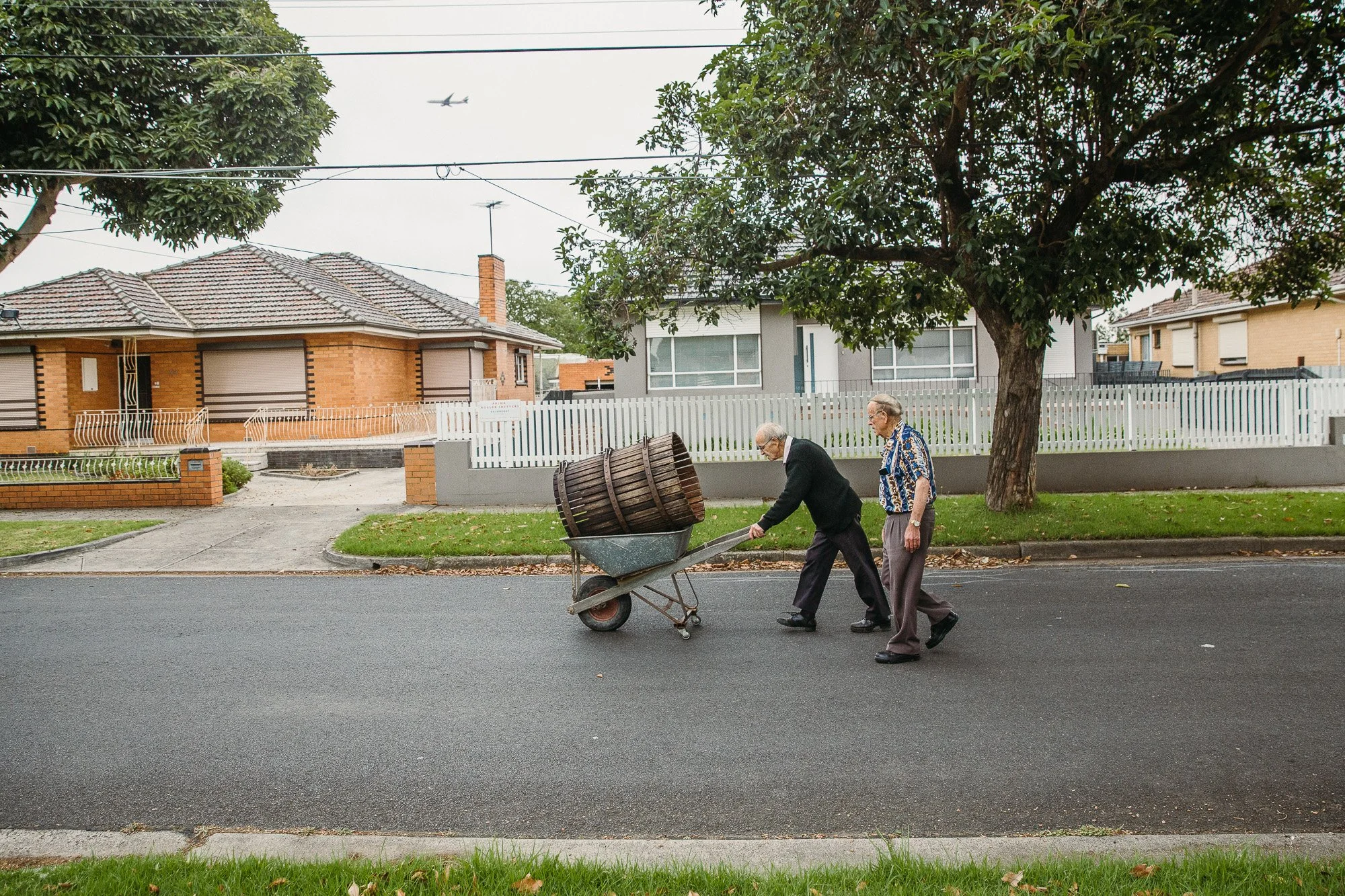
Matteo and Nazzario, Reservoir, 2021
2. What the job was
The suburban winemakers I was commissioned to document were predominantly post-war migrants who brought the practice with them. They all lived in the suburbs of Darebin, and made their wine in sheds and cellars and under the house. They all had their own methods and their own personalities. What united them was that they made wine.
Their houses are winemaking places, indeed the street itself is, as the brothers share equipment between their houses. The shot was set up, of course. It was August, vintage had to wait six months. But Matteo and Nazzario insisted they demonstrate the process. How do you explain what you do in the abstract and still convey what it actually means?
The work was commissioned by the Darebin FUSE festival and produced a hundred or so images made into short videos with the recorded voices of the winemakers. I was particularly attracted to this project as I too am a backyard winemaker. I genuinely wanted to compare notes. No brief was given, my submission was about documentation. It was in the making and the editing and the listening to the voices of the makers that the project started to take form. It was not documentation, but it kind of was, and it was not a series of portraits, but they were. For me it became a crystallisation of what my photography was working on and thinking about and skirting around but never had the words to pin down. The process helped me answer the fundamental question of why I take pictures at all.
For the festival, the culmination was an exhibition and screening followed with a lunch for the winemakers. Whole families turned up. It was a great day. A year or so later I was still trying to decipher why the experience moved me so much. This essay is based on a Nerd Nite talk I gave about my experience. I continue to think about and decipher the experience.
3. The questions
What is it about making things that is so appealing? Why do we make what we could easily buy, or just go and look at in a gallery? Why is money the last thing you think about once you are properly inside the practice? Is being an amateur less of a thing than being a professional? How do you judge the quality of the thing after you have made it? Why judge it at all?
I had been making wine since 1993 and I could not answer any of that.
4. Trying to be a vigneron
In 1993 I wrote a letter to the CSIRO and asked them how to plant a vineyard. Who else would know? People still wrote letters then.
And lo and behold, they wrote back. A fat envelope full of photocopies and handwritten notes. Who were these people? I am pretty sure they were librarians.
They also suggested two books. Viticulture Volume 2: Practices, by Coombe and Dry, and Making Good Wine, by Rankine. Those two books were to be my education. Those two books were going to make me a vigneron.
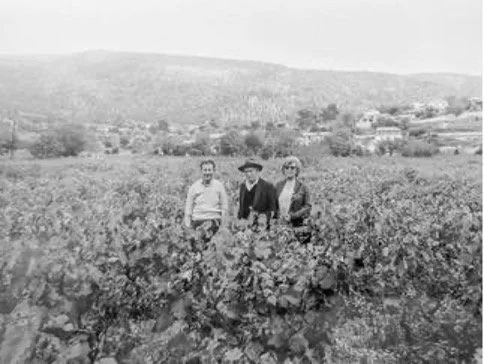
My parents in the vineyard below Dragano, Lefkada
What put the idea in my head was a backpacking trip at twenty-three to Europe where I visited my mother's vineyard in the old country. It is maybe twenty or so rows, below the village of Dragano on the island of Lefkada in Greece. I came home and set about convincing her to hand over the family back yard in Thornbury, on Wurundjeri country, and let me plant a vineyard in it. It is not there anymore.
I had asked my parents what they thought. They could not really see the point, as they did not drink much after twenty-five years of being in Australia. My mother would have preferred a tomato and zucchini harvest. Growing grapes and making wine in Greece was amongst all the other agrarian activities they did, to get by. They did not continue here as some other migrants did. They were too busy working and doing real stuff.
We planted twelve vines, with scientific advice from Coombe and Dry. Grape vines are like weeds, so we grew more from the cuttings, and twelve became forty. We harvested them and crushed them with food-safe certified gumboots in a little brick and concrete trough my father built.
I tried to make the wine the way I had been trained to do it. My education was in the physical sciences, so I did it scientifically. I was back in the lab. The good thing about not being in school is that you can be as messy as you like, and I was very messy. I added chemicals, I measured, I tracked, I plotted, I tried to find relationships, I tried to apply the theoretical model onto the data.
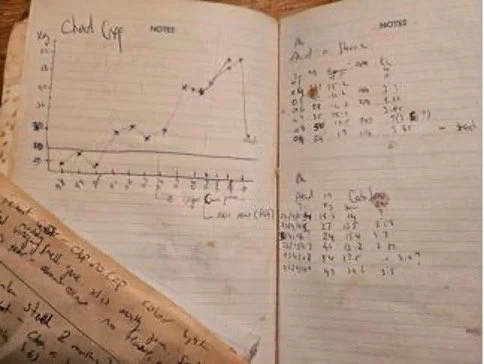
Winemaking notebook, Thornbury
I once tutored a student in maths at her home. While we were trying to solve a quadratic equation, her Greek father was forcing me to try his homemade wine. He was very proud of it. I took the glass, sniffed, had a sip, and could not help screwing up my face. “Goes well with Coca-Cola”, he said. He was beaming. He loved his wine. I was not sure if he actually needed me to like it.
I kept applying the theory to my winemaking. I tried, but sometimes the wine just needed the coke.
To be committed to anything you must love it. But it is much easier to love something that is not pushing you away, and my wine was pushing me away.
So I read harder and measured more. I did not want to merely plant a vineyard. I wanted to master winemaking. I wanted someone else to like my wine.
What I worked out eventually is that backyard winemaking is a little different to the industrial practice described in Rankine. There are two things that matter. They are not secrets. They are in the book. They just have primacy over everything else in it.
The smaller the volume, the greater the ratio of surface area to volume. And oxidation is the enemy. The first makes the second worse, because proportionally more of the wine is touching air. So keep the air out, and use potassium metabisulphite. The free sulphur binds the oxygen and stops it spoiling.
That is all you need to know. All other knowledges have diminishing returns.
Actually there is a third thing. You need good grapes to start with, and it is hard to grow them well in a Thornbury backyard. Some years it came down to individual berries. So we started buying grapes as well as growing them.
The grapes came around again the next year. So I did it again.
5. Home is where I make
None of the winemakers I photographed described what they did in general terms. It was very much specific to them, to their winemaking practice. How they got there seemed just as important as what they did during vintage. Specific dates and place names arrive unprompted, and every one of them is fixed to something specific that happened.
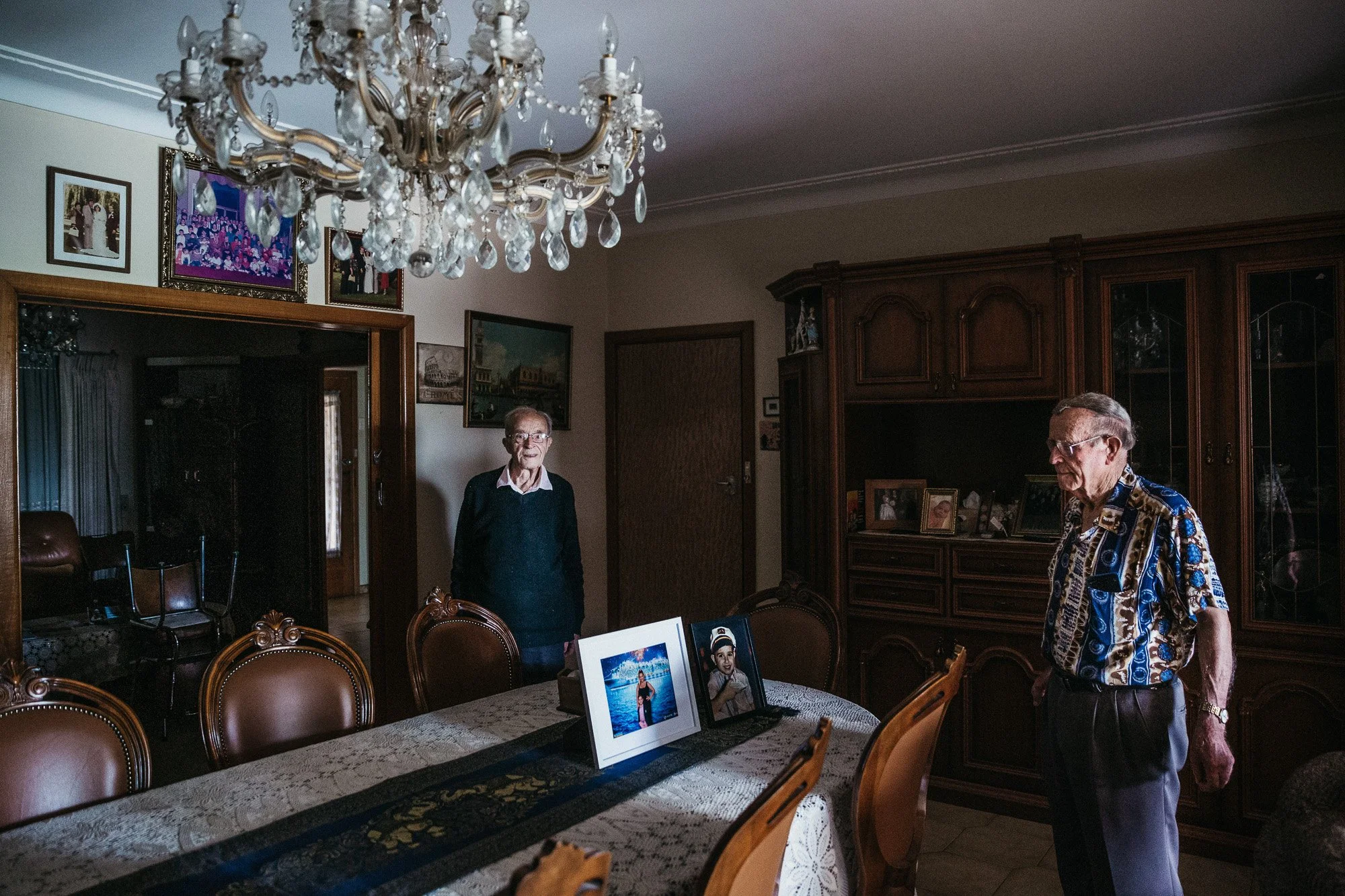
Matteo and Nazzario, Reservoir, 2021
Matteo and his twin brother Nazzario had dates punctuating their conversation like it was vital each confirmed the specifics. 1947. 1963. 1978. Time passes.
And the specific places were all part of the practice. Even the street became part of the making process as they demonstrated how they wheel their shared winepress between their houses. Home is where I store my wine press. My winemaking place. The practice is yours, so the place becomes yours, whatever it says on the title deed.
And there is a Greek word for the other side of that. Ξενιτιά / Xenitia, being away from the place you are from. Καημός / Kaimos is the burning ache. The old songs are full of it. The dates those makers gave me were arrivals, buying the house, marrying. Every date is a mark of getting some real ground under yourself. A shed or cellar is the place where you stood and made something happen.
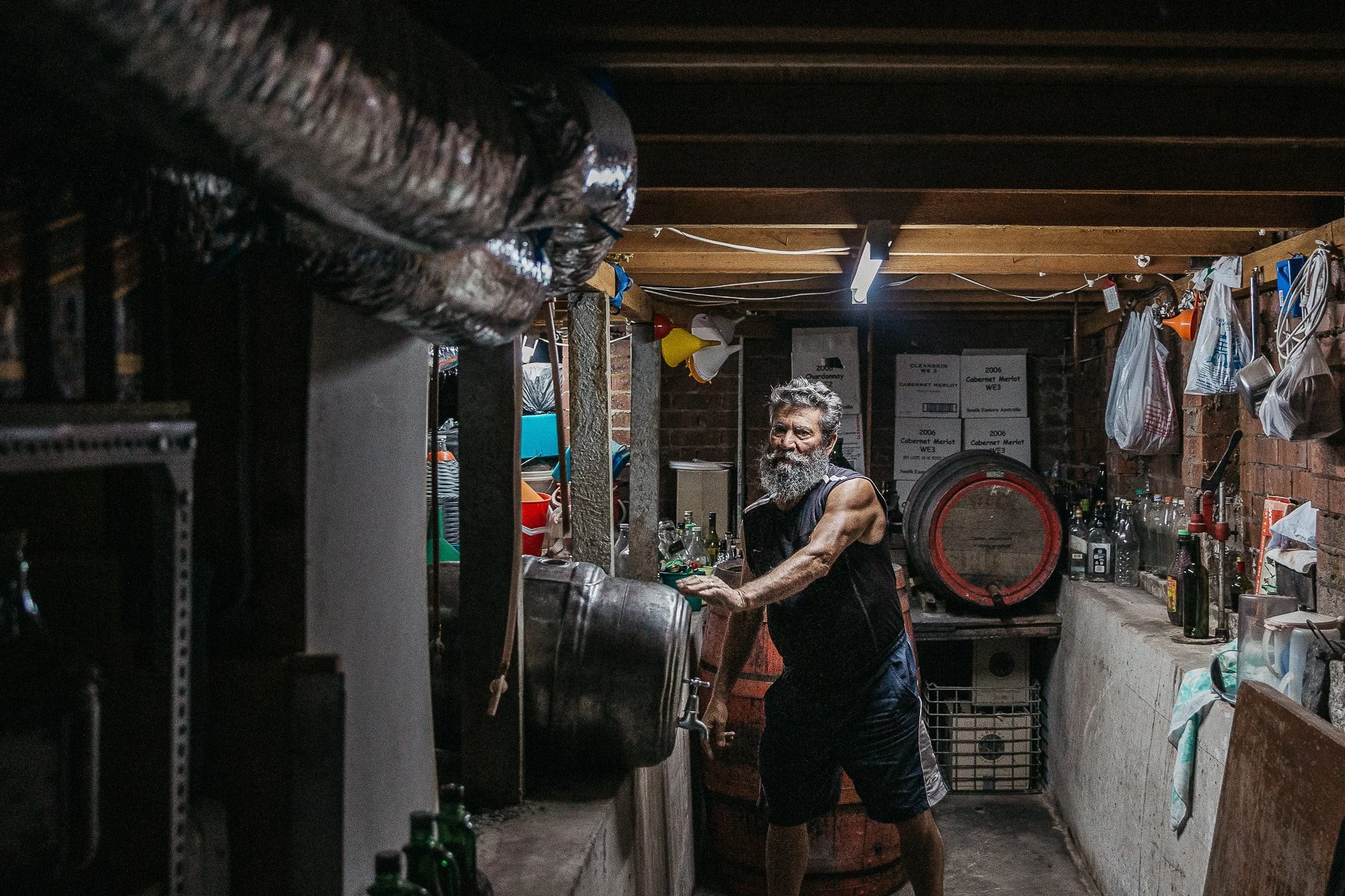
Rocco, Thomastown, 2021
Rocco dug out his winemaking place with a jackhammer in a week. I am not sure whether he was conscious of his flexing in the photo above, but I sure encouraged it. And again the wine was pinned to a place and to a milestone. Coming to Australia, getting married. 1966, 1970. Time and place. Nothing about it is generic. It happened in that house, in that year, because of that arrival and because of that wedding.
Nobody in those households was optimising anything. The ego did not go anywhere either. It was not transcended and it was not worked on. It had nothing to do, because the attention was entirely taken up by the fruit, the temperature, the smell of the shed. The winemakers wanted me to know how long they had this specific press, this specific crusher. It was necessary. They expressed the specific conditions of how the wine was made. I got the impression that they were not trying to educate me on a process but express who they were by what they did. In the micro specific. The conditions and how they worked with them defined them.
None of that was in Coombe and Dry.
When I photographed those winemakers, I photographed them as one of them. That was a privileged position. What I didn't see then was that it was a kind of collaboration. Their practice was their own. I brought my practice to the work. I am usually surprised with what results. I rely on the doing to inform me what the work is.
6. More ritual than enlightenment
Ten years ago, my shrink suggested a book that might sort out a bit of ennui I had picked up along the way. Robert Johnson's Transformation: Understanding the Three Levels of Masculine Consciousness. My shrink told me I was this close to enlightenment. I was not sure if that was good or bad. And I didn't know I even had a masculine archetype. He told me I overthought everything. I no longer own a copy but it has stayed with me anyway.
Johnson was a Jungian and took three blokes from literature and read them as three levels of consciousness. Don Quixote was the simple man, acting full of heart with very little idea what he was actually doing. Hamlet was the complex one, who saw everything including himself, and the seeing got in the way of the acting. And everyone dies. Faust was the third. He could act and know what he was doing, and the knowing did not stop him acting. It also meant he had responsibility for the act.
But I had begun to wonder whether Johnson's ladder of development belonged to a more privileged way of thinking. My parents never had the luxury of standing outside what they did. They never self-actualised. Johnson's hierarchy was a long way from the working-class world they came from, where you mostly learned by doing the thing that needed doing.
I could recognise myself in the first two easily enough. I came home from backpacking in Europe and planted a vineyard because I had seen one. Then I learned. I read, measured, plotted and tried to understand exactly what I was doing.
Faust interested me because he seemed to offer me a way out of my own head: to know what I was doing without having to watch myself knowing it.
I never witnessed my mother self analyse. She grumbled about the birds eating grapes, or the effectiveness of a fungicide, or the amount of clay in the soil. Each problem had its own solution, and the weather and the vine in front of her decided what it was.
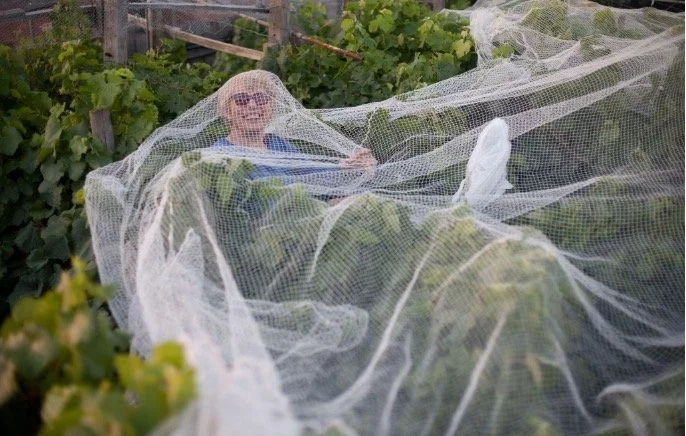
My Mother in the vineyard, Thornbury, 2004
A musician can learn jazz at a conservatorium. A shepherd can learn to play a tsamiko on the clarinet by playing beside people who want to dance it. The first can explain the theory. The second may simply know what to play.
There was always another book to read, another measurement to make, another way the wine might prove me wrong. My knowledge was provisional because I was always comparing what I was doing with what else I might learn.
The winemakers I photographed did not talk like that. Their knowledge was specific. This fruit. This press. This cellar. This year. They could be wrong, and the wine could be bad, but what they knew was sufficient for the thing in front of them.
For a long time I carried Johnson as a story about arriving somewhere, some state where acting and being aware finally came together. What interests me now is not the arrival but the returning.
A practice does not need its reason present every time you do it. You do not have to reconstruct why each time you begin. The why can go missing for years, and the thing is still there to be done. Turning up just happens again. And again.
And each time you return, you are not starting again. What you learned before is already there. But so are the people. The ones who showed you, the ones who showed them. The doing carries a continuum of connection beyond your memory, beyond your own self. The practice summons the dead, the many hands that worked it before you. It is more ritual than enlightenment. It is not only a way of knowing how to do the thing. It's joining in a dance already long underway.
Now I do not think you need to get there. I think you just turn up.
7. So I did it again
What I was left with was an age-old practice that resembled a cooking session one year long. It was very grounding, and it gave me something to do all year round.
Then I had a kid and it was all hands on deck in the shed. I loved that process. I got the communal feels of people getting together and getting their hands dirty. The visceral nature of it was very rewarding. It gave back. My own group of enthusiastic helpers was quite small, but it was a very connecting activity to do with my son. Every year we collected grapes, we crushed grapes, we pressed grapes, and we waited. He loved the squishy part more than I did, and kid labour was cheaper then.
I still go out to the shed. I draw a sample, look at the colour, sniff it, taste it, add a bit of sulphur to freshen it up, maybe. And wait.
Ritual is a good word for all this doing doing doing. The repeated attentive act, done at the same time this year because it was done at that time last year. For some reason it is always 40 days for the ferment. For a long time the activity in that shed was only habit, and habit on its own stays habit. What turned it into a practice was that I was paying attention while I did it. Ritual is habit with attention and care.
For me, the doing comes first. What you understand about yourself turns up afterwards, out of the doing.
I prefer not to scout a location before a shoot. I want to arrive without having already made the picture in my head. I might move something, or ask someone to do it again, but I want enough left open for an accident. Sometimes the situation is found and sometimes it is built. A portrait, a collaboration with a dancer, a landscape. The method does not change. I turn up and work with the conditions that are there.
Barthes has a line on waiting in A Lover's Discourse, and I have carried it with me for years. I remember it as the lover is the one who waits. His waiting is an agony, and so is mine in its small way. But my suffering is expected and while not welcomed, it is accepted as inevitable: ti na kanoume, what can we do?
Not necessarily quietly. Greeks complain constantly. It is built into the greeting. How are you? Na ta poume kala. Let us just say it is good.
Nobody decides to make wine this year. The decision, if there is one, is whether to stop. So you complain out loud, to yourself, that the thing is hard, and you do it anyway. The complaining is not examining your feelings. It is putting the friction outside you so you can keep going.
What I take from that is that love has the quality of infinite time in it. Not waiting for something to arrive. Just time, with no end set on it and nothing being counted. Amateur comes from amare, to love. It names someone who does a thing for no reason beyond loving it. An amateur is a lover, a lover waits, and none of that is imagined as progress towards anything.
It is not an inward exercise. The ritual was there before me. My parents did it, Matteo and Rocco do it, my mother did it with me and I did it with my son. Going out to the shed is joining in, whether or not anyone else is in the backyard.
The wine is never perfect. But it is mine.
I would rather it did not need the coke. But I will use it if I have to.
8. A jolt of something
For years my mother and I worked the backyard vineyard together. We would debate pruning principles or grafting methodologies. She was usually right. Through those discussions and those walks in that forty vine vineyard I felt a connection to others before me.
It was a lot of work for her, and after she could not take care of it we got rid of it. She has since died. The backyard is bare.
That land in the old country, which I first visited as a tourist, actually felt more real after I had walked the narrow gaps between the vines here in the backyard in Thornbury. And now, even with my mother's passing, that connection is still there.
I remember where each vine was planted, and which cane my father grew to create a new trunk. The people go and the vineyard goes, and yet their trace is somehow etched in the making. I continue to make wine with bought grapes and am still connected to the others who are no longer here to help.
I recall Roland Barthes' idea of the punctum, the recognition that an object, or indeed a person, was undeniably there in front of the camera. It pierces. I can’t help but apply the idea to the practice. You look at a berry, or taste the wine maturing in the tank, and you get a jolt of something that takes you back beyond memory. The process of making wine evokes the many hands and lives that crushed, that pressed, that pruned, and indeed drank the wine.
The photograph carries the care that made it and I hope that that care is available to someone else to view it. Whether someone does I cannot know. I work with the assumption that it can.
Belonging did not start with feeling that I belonged. It started with meekly joining something that already had belonging in it.
Even if you are quite alone.
9. Vince
Vince was the first winemaker I photographed. We spent most of the time talking about his family, showing me framed photographs. He made his wine himself and he drank it himself. His children had kind of lost interest in it some time back. He did not reach out for compliments or feedback. He just made. He was 78.
And while I was not asked for my opinion, his wine did not need Coca-Cola to be loved.
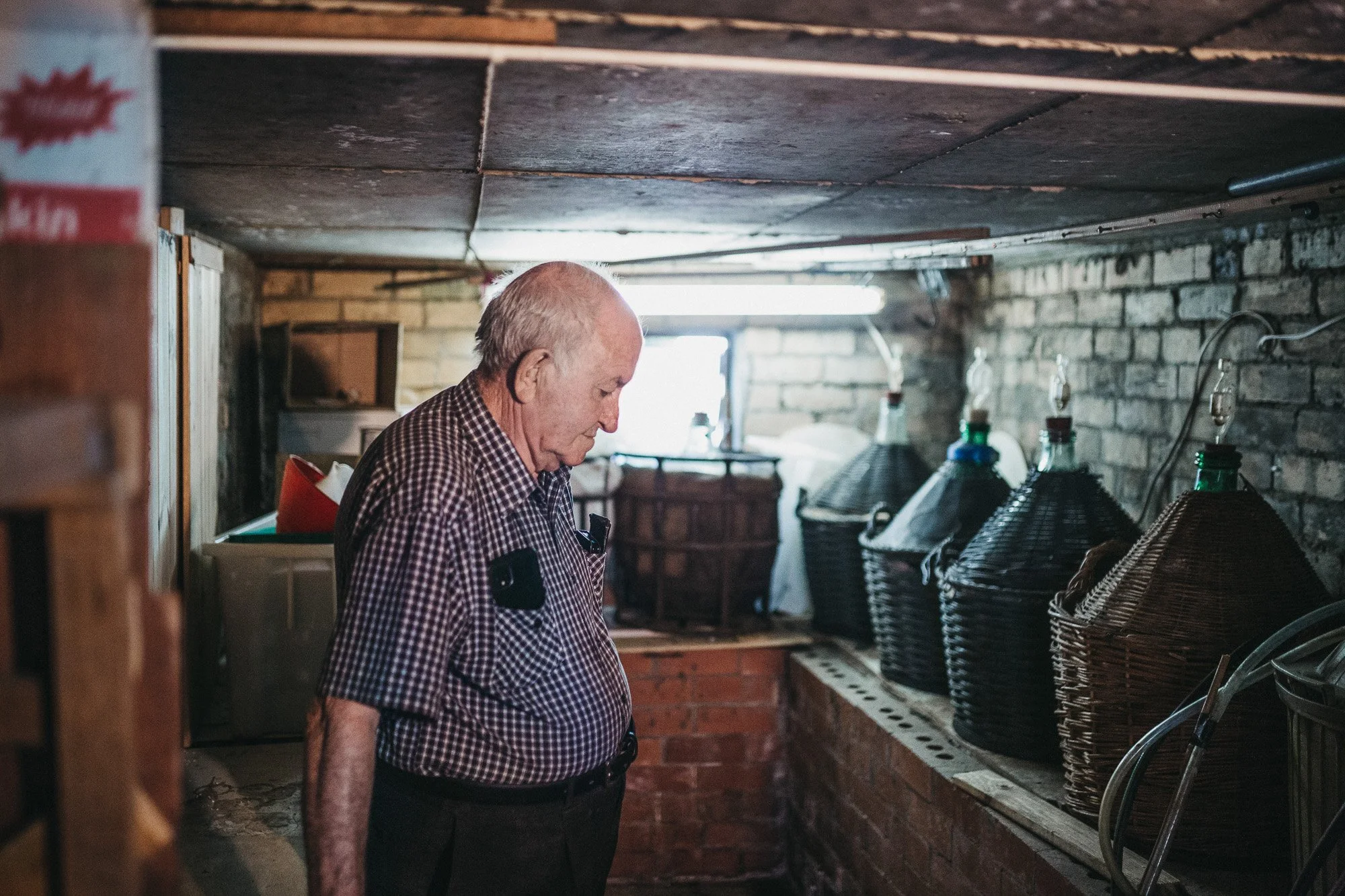
Vince, Kingsbury, 2021
Bibliography
Barthes, Roland. 1981. Camera Lucida: Reflections on Photography. Translated by Richard Howard. New York: Hill and Wang.
Barthes, Roland. 1977. A Lover’s Discourse: Fragments. Translated by Richard Howard. New York: Hill and Wang.
City of Darebin. 2021. “Story of Suburban Winemakers Told in FUSE Exhibition.” Darebin Community News, Autumn 2021. https://www.darebin.vic.gov.au/files/assets/public/v/1/about-council/documents/darebincommunitynews_autumn2021.pdf
Coombe, Bryan George, and Peter R. Dry, eds. 1992. Viticulture. Volume 2: Practices. Adelaide: Winetitles.
Johnson, Robert A. 1993. Transformation: Understanding the Three Levels of Masculine Consciousness. San Francisco: HarperSanFrancisco. Originally published 1991.
Rankine, Bryce Crossley. 1989. Making Good Wine: A Manual of Winemaking Practice for Australia and New Zealand. Melbourne: Sun Books.
Sideris, Laki. 2023. "Suburban Backyard Winemaking: Ritual and Transcendence." Public presentation, Nerd Nite Melbourne 51.2. YouTube video. https://www.youtube.com/watch?v=G86n83hBWX4.
Webb, Carolyn. 2021. “‘I Just Like Squishing the Grapes’: Homemade Wine a Vintage Family Tradition.” The Age, March 28, 2021. https://www.theage.com.au/national/victoria/i-just-like-squishing-the-grapes-homemade-wine-a-vintage-family-tradition-20210326-p57ebj.html